
The Environmental Impacts of Fast Fashion
For those that wear them, clothes are functional and are used to express our identity, but how many of us consider how our choices affect others and what can we, as consumers, do about it?
Clothes are what we wear on a day to day basis (well most of us), in order keep us both protected from the elements and out of sight of unwanted eyes, however, clothing does not simply perform a functional purpose.
Clothing is widely used as a mode of expression, rebellion and if you are lucky, seduction. What you wear can reflect your own self-confidence, beliefs, and how you want people to perceive you.
“Create your own style… let it be unique for yourself and yet identifiable for others.”- Anna Wintour. Literally speaking, the reality is that consumers are constantly copying whatever influencers and designers in the fashion industry throw at them.
By constantly manufacturing clothing and increasing the number of seasons in fashion from 2 to 52, companies have made products quickly outdated leading to consumers constantly playing catch up, in terms of capturing the new trends.
The term fast fashion was coined in fashion retail to describe the quick turnover of designs that became extremely popular in the early 2000s.
What are the impacts of fast fashion?
Fast fashion has a plethora of negative social and environmental impacts. Negative externalities are produced at virtually every step of the supply chain ranging from production to disposal. (source)
Environmental impacts:
- The industry emits around 10% of global greenhouse emissions annually.
- Annually, the fashion industry emits around 20% of global waste per annum.
- Approximately 85% of textiles produced end up in landfill- a ridiculous magnitude of waste.
- 10,000 litres of water are required to make just one pair of jeans- that is the equivalent to drinking water for an entire year for 1 person.(source)
But what do these numbers mean?
What they mean is that the fashion industry is rapidly growing at an unsustainable rate. The industry pollutes the land, exhausts water supplies and pollutes the atmosphere, all which contribute to the rapidly growing issue of climate change. It is estimated by the UN that the fashion industry consumes more energy than the aviation and shipping industry combined.
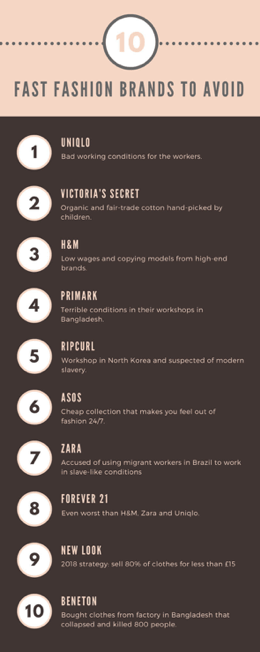
Which brands are the main industry culprits?
What steps can I make to combat this issue?
- Buy second hand clothing from charity/vintage shops in order to recycle and re-use.
2. Boycott specific shops and/or campaign against worker mal practice as well as environmental inconsideration .
3. Buy less and buy from better brands such as Patagonia, Etrican, Bleed and many more (source ).
In order to make substantial positive change, the consumers, in. other words-us, have to make the effort. So, next time you buy a new item of clothing, make sure you consider where and how that garment has been produced and at what environmental cost.
 Confessions of a Climate Change Freak